Thyroid and Adrenal Glands
1. The Thyroid Gland
1.6. Clinical Correlations
|
Disorder |
Cause |
Key Features |
Physiological Basis |
|
Hypothyroidism |
↓ T₃/T₄ (e.g., iodine deficiency, Hashimoto’s) ↑ TSH |
Fatigue, weight gain, cold intolerance, bradycardia |
↓ metabolism |
|
Hyperthyroidism (Graves’ disease) |
Autoimmune stimulation of TSH receptor ↓ TSH |
Weight loss, heat intolerance, tremor, tachycardia, goitre |
↑ metabolism |
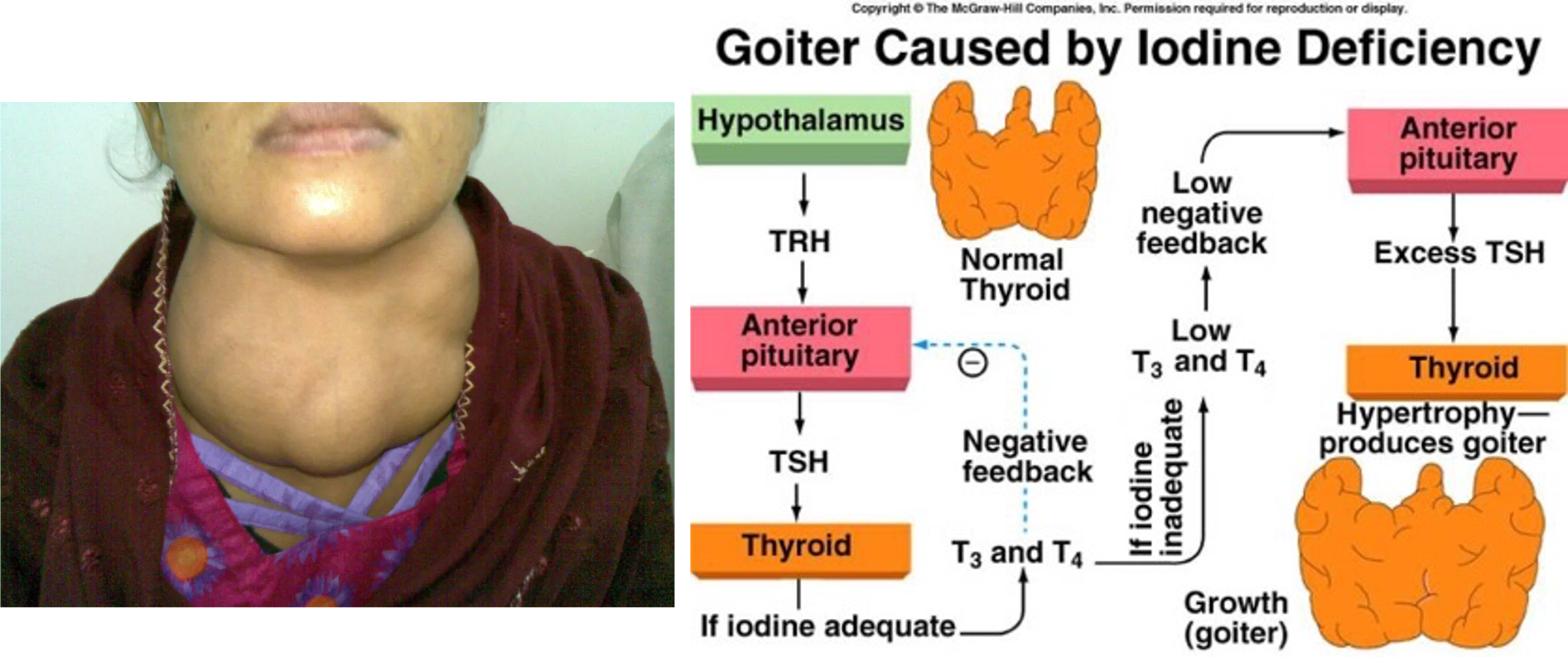
- A goiter is a hypertrophied thyroid that results from the thyroid increasing in size in an attempt to produce more thyroxin in the absence of iodine (endemic colloid goiter).
- Enlarged goiter may occur in people who do not have iodine deficiency (idiopathic nontoxic colloid or exophthalmic goiter -Graves’s Disease).
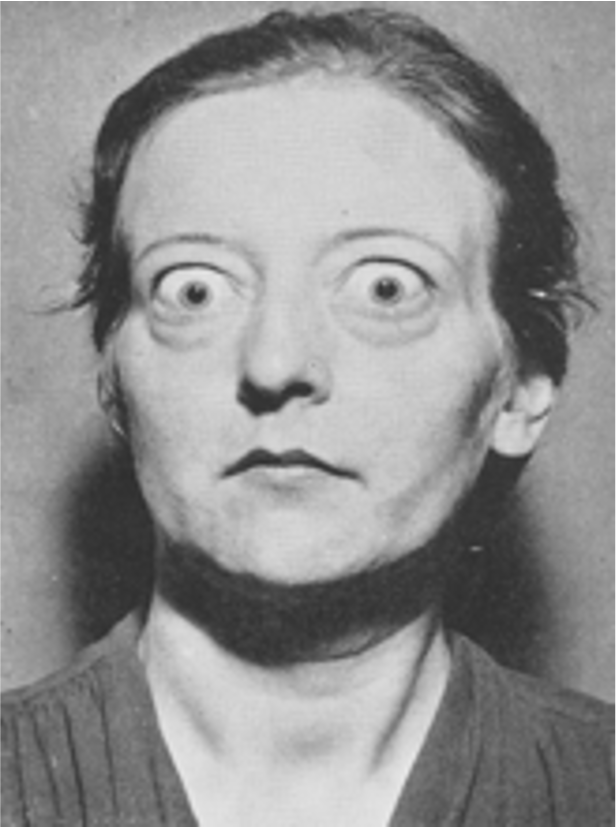
- This disorder develops as result of autoimmunity in which antibodies against TSH receptor act to stimulate the thyroid in the absence of TSH with resultant development of hyperthyroidism.
- The antibodies developed are called TSI (thyroid stimulating immunoglobulin).
- The term myxoedema (accumulation of fluids in subcutaneous connective tissues) is applied to advanced hypothyroidism.
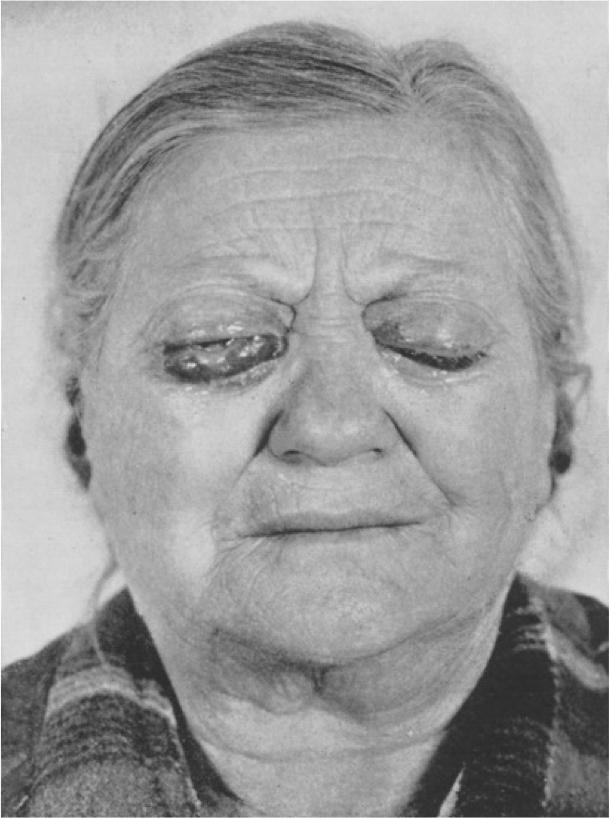
- It is characterized by swelling of the skin and subcutaneous tissues.
- It develops in patients with total lack of thyroid function.
- Hypothyroidism may also be caused by an autoimmune attack on the thyroid gland (Hashimoto’s disease or thyroiditis).
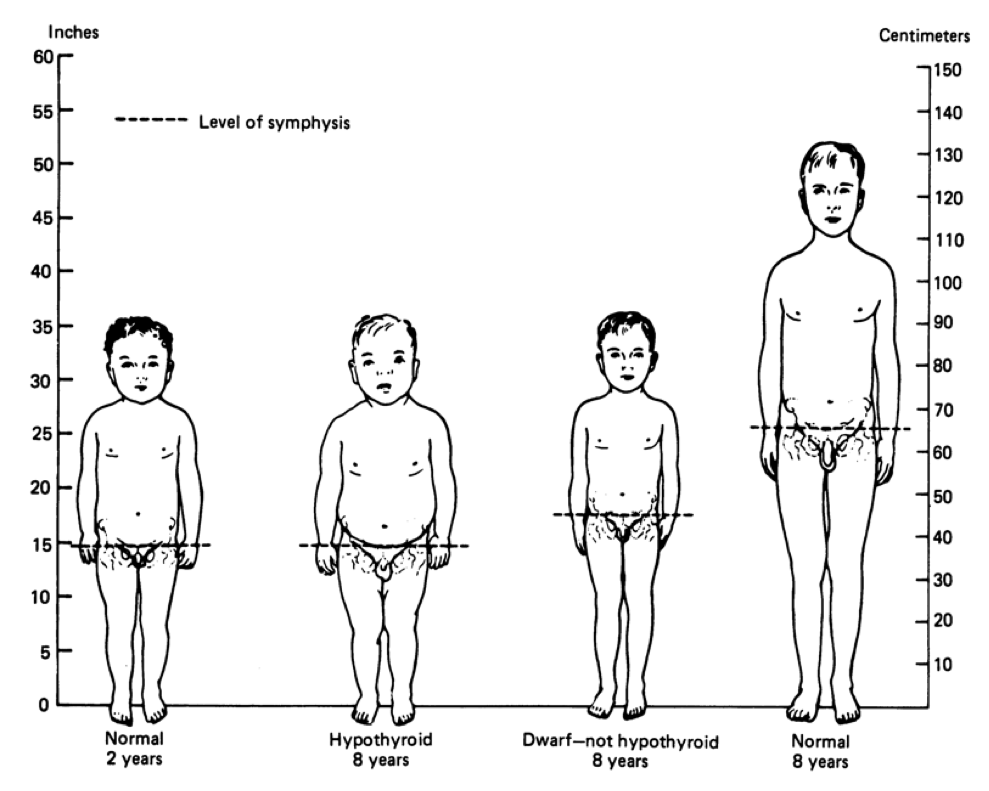
- Cretinism: Hypothyroid conditions during fetal development result in impairment of growth and brain functioning.
- The hypothyroidism may be due to iodide deficiency or to congenital defects, such as lack of TSH receptor..
- The result is a mentally retarded, dwarfed newborn.