Thyroid and Adrenal Glands
2. Adrenal Glands
2.2. Synthesis of Adrenal Cortex Hormones
- The adrenal cortex is the outer region of the adrenal gland and is responsible for the production of steroid hormones, collectively known as corticosteroids.
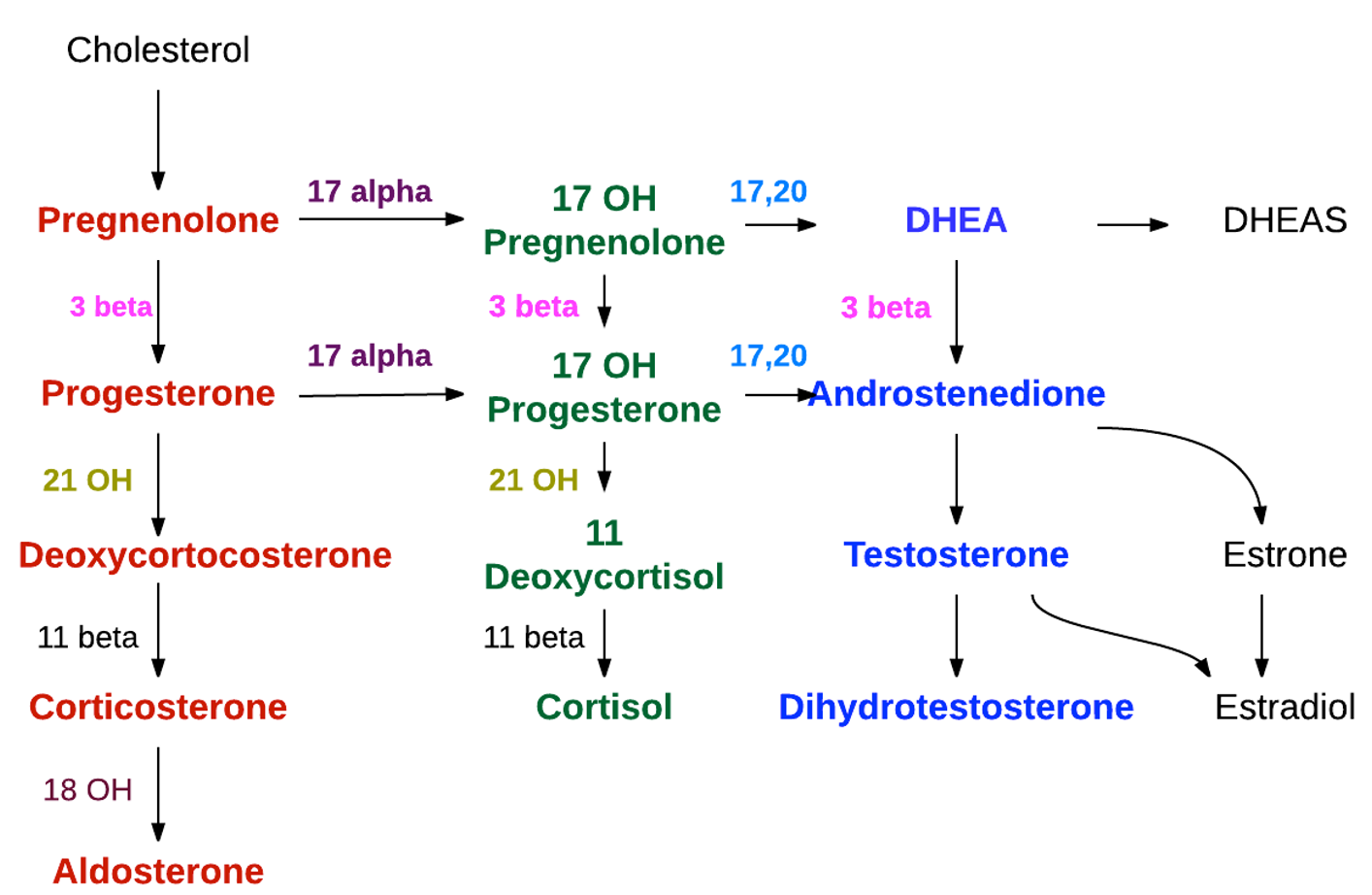
- All adrenal cortical hormones are steroid-based and derived from cholesterol, but each cortical zone expresses distinct enzymes that determine which specific hormone is produced.
- Together, these hormones enable the body to maintain metabolic stability, electrolyte balance, and adaptive responses to stress.
1. Zona Glomerulosa – Mineralocorticoids (Aldosterone)
-
Main Hormone: Aldosterone
-
Primary Function: Regulates sodium (Na⁺) and potassium (K⁺) balance and maintains blood pressure.
-
Synthesis Pathway:
Cholesterol → Pregnenolone → Progesterone → 11-Deoxycorticosterone → Corticosterone → Aldosterone -
Regulation:
-
Controlled mainly by the renin–angiotensin–aldosterone system (RAAS) and plasma K⁺ levels.
-
ACTH (from the pituitary) has a minor stimulatory role
-
2. Zona Fasciculata – Glucocorticoids (Cortisol)
-
Main Hormone: Cortisol
-
Primary Function: Influences glucose metabolism, stress response, immune modulation, and protein catabolism.
-
Synthesis Pathway:
Cholesterol → Pregnenolone → 17-Hydroxypregnenolone → 17-Hydroxyprogesterone → 11-Deoxycortisol → Cortisol -
Regulation:
-
Controlled by the hypothalamic–pituitary–adrenal (HPA) axis.
-
CRH from the hypothalamus stimulates ACTH release from the pituitary, which in turn stimulates cortisol synthesis and secretion.
-
Cortisol exerts negative feedback on both the hypothalamus and pituitary.
-
3. Zona Reticularis – Androgens (DHEA and Androstenedione)
-
Main Hormones: Dehydroepiandrosterone (DHEA) and Androstenedione
-
Primary Function: Serve as precursors for sex hormones (testosterone and estrogen) and contribute to secondary sexual characteristics.
-
Synthesis Pathway:
Cholesterol → Pregnenolone → 17-Hydroxypregnenolone → DHEA → Androstenedione -
Regulation:
-
Stimulated by ACTH, similar to cortisol.
-
No strong negative feedback system, so androgen levels depend largely on ACTH activity.
-