Thyroid and Adrenal Glands
2. Adrenal Glands
2.3. Regulation of Adrenal Cortex Hormones
- The adrenal cortex maintains homeostasis through the secretion of mineralocorticoids, glucocorticoids, and androgens.
- Each hormone class is regulated by distinct mechanisms that respond to systemic needs such as stress, electrolyte balance, and metabolic demand.
1. Regulation of Mineralocorticoids (Aldosterone) – Zona Glomerulosa
Main
Hormone: Aldosterone
Primary Role: Controls sodium and
potassium balance and maintains extracellular fluid volume and blood pressure.
Regulatory Mechanisms
1. Renin–Angiotensin–Aldosterone System (RAAS):
- The most important regulatory pathway.
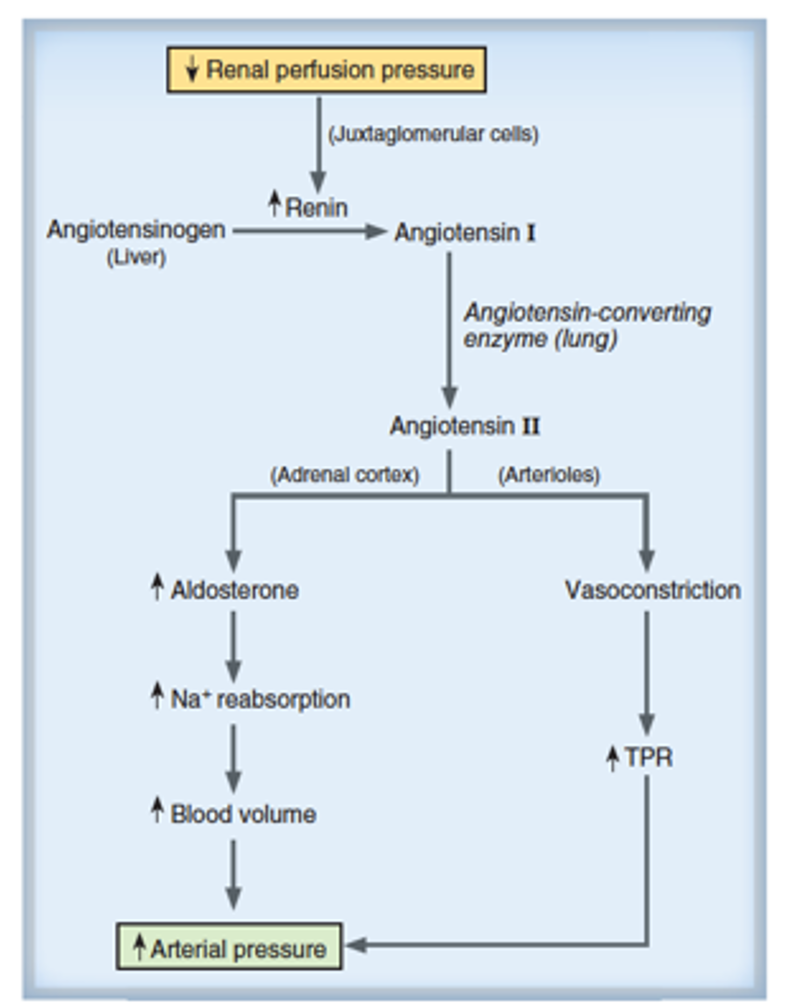
- Low blood pressure, low blood volume, or low sodium concentration stimulates the kidney’s juxtaglomerular cells to release renin.
- Renin converts angiotensinogen (from the liver) → angiotensin I, which is then converted by angiotensin-converting enzyme (ACE) → angiotensin II.
- Angiotensin II directly stimulates the zona glomerulosa to secrete aldosterone.
- Aldosterone increases Na⁺ reabsorption and K⁺ excretion in the kidneys, restoring blood pressure and fluid balance.
2. Plasma Potassium Concentration:
- Elevated K⁺ levels directly stimulate aldosterone secretion.
- Decreased K⁺ inhibits it.
3. ACTH (Adrenocorticotropic Hormone):
- Plays a minor role by transiently enhancing aldosterone secretion.
2. Regulation of Glucocorticoids (Cortisol) – Zona Fasciculata
Main
Hormone: Cortisol
Primary Role: Regulates glucose
metabolism, immune response, and adaptation to stress.
Regulatory Mechanisms
1. Hypothalamic–Pituitary–Adrenal (HPA) Axis:
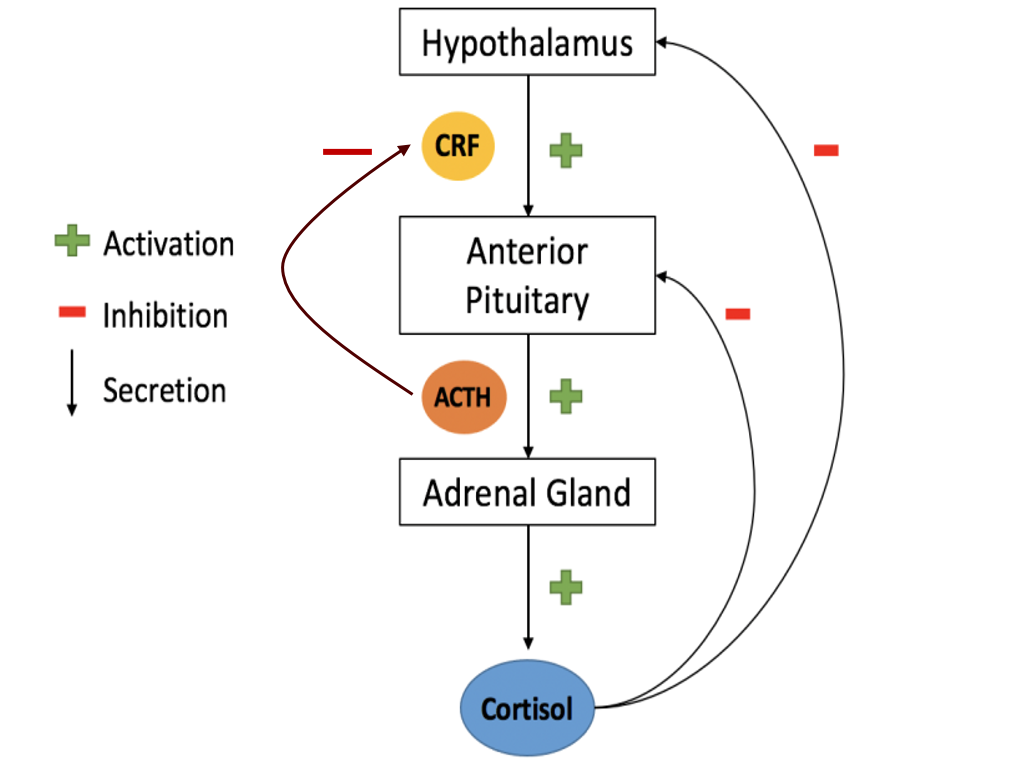
- Stress or circadian rhythms stimulate the hypothalamus to release corticotropin-releasing hormone (CRH).
- CRH acts on the anterior pituitary, triggering release of ACTH.
- ACTH stimulates the zona fasciculata to synthesize and secrete cortisol.
2. Negative Feedback Control:
- Elevated cortisol levels inhibit CRH release from the hypothalamus and ACTH release from the pituitary.
- This feedback loop maintains cortisol within normal physiological limits.
3. Circadian Rhythm:
- Cortisol secretion follows a diurnal pattern, peaking in the early morning and reaching its lowest level at midnight.
- This rhythm aligns metabolic activity with daily energy demands.
3. Regulation of Adrenal Androgens – Zona Reticularis
Main
Hormones: Dehydroepiandrosterone
(DHEA) and Androstenedione
Primary Role: Act as precursors
for sex steroids and influence secondary sexual characteristics.
Regulatory Mechanisms
1. ACTH-Dependent Secretion:
- The zona reticularis responds to ACTH, similar to the zona fasciculata.
- Increased ACTH enhances androgen synthesis, while low ACTH reduces it.
2. Lack of Strong Feedback Control:
- Unlike cortisol, adrenal androgens do not exert significant negative feedback on CRH or ACTH.
- Their levels depend largely on the activity of the HPA axis.
Key Takeaway
-
Cortisol regulation is mainly under the HPA axis with strong feedback control.
-
Aldosterone secretion is governed by the RAAS and plasma K⁺ concentration.
-
Adrenal androgens follow ACTH influence but lack tight feedback regulation.
-
Disruptions in these regulatory pathways lead to clinically significant adrenal disorders with characteristic hormonal and systemic effects.