Lecture Notes: Sexual Differentiation, Sex Determination, and Gametogenesis
5. Gametogenesis
5.1. Spermatogenesis
5.1 Location and Timeline
- Occurs within seminiferous tubules of testes.
- Supported by Sertoli cells (“nurse cells”).
- Entire cycle takes ~74 days.
- Continuous from puberty throughout life.
5.2 Phases of Spermatogenesis
- Spermatocytogenesis:
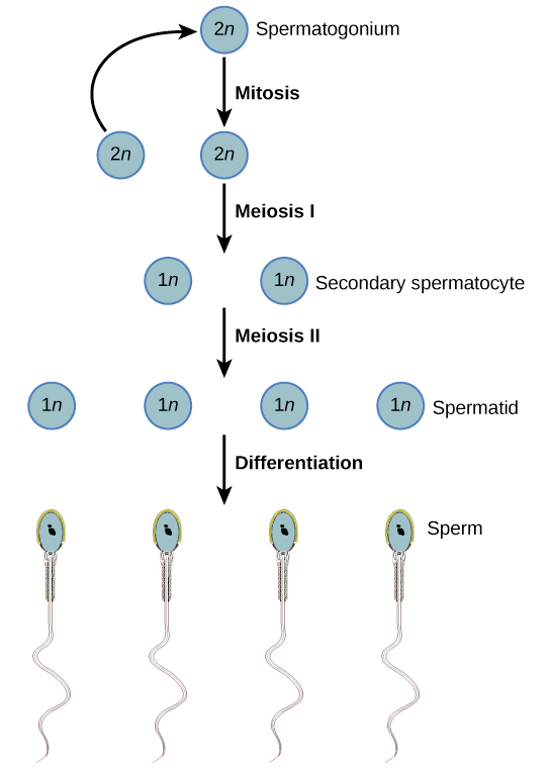
a. Mitotic proliferation of spermatogonia (diploid stem cells) → primary spermatocytes.
§ Type A → stem cells
§ Type B → commit to meiosis
b. Meiosis I: primary spermatocytes → secondary spermatocytes.
c. Meiosis II: secondary spermatocytes → spermatids.
2. Spermiogenesis:
a. Spermatids transform into mature spermatozoa
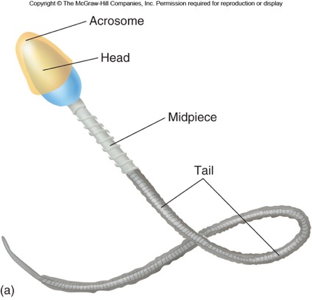
b. Formation of acrosome, flagellum, nuclear condensation.
3. Spermiation
-
- Release of mature sperm into lumen.
5.3 Hormonal Regulation
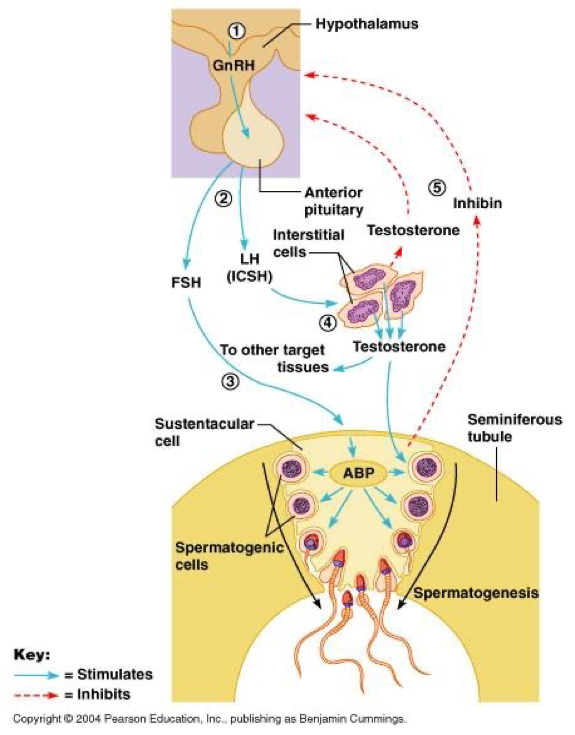
- GnRH (from hypothalamus) → stimulates anterior pituitary to release:
- FSH → stimulates Sertoli cells
- LH → stimulates Leydig cells to produce testosterone
- Testosterone + FSH → essential for completion of spermatogenesis
- Inhibin B from Sertoli cells → negative feedback to pituitary