IMPACT AND COMPLICATION ON ETHICS IN IT: Intellectual Creations
| Site: | Newgate University Minna - Elearning Platform |
| Course: | Ethics and Legal Issues in IT |
| Book: | IMPACT AND COMPLICATION ON ETHICS IN IT: Intellectual Creations |
| Printed by: | Guest user |
| Date: | Monday, 2 November 2026, 11:45 PM |
Description
Introduction
Two separate kinds of intellectual creations have emerged as a result of the revolutionary changes in the creative process brought about by the development of modern computing technologies: works made by computers and works created using computers. Intellectual property (IP) law is significantly impacted by these categories, especially with regard to authorship, ownership, and protection. The divide between works produced by computers and works made with computers is becoming more and more important. Although works produced with computer help are sufficiently protected by traditional copyright laws, the emergence of AI-generated works poses new ethical and legal issues. Legal frameworks must change as technology does in order to guarantee that innovative output produced by both humans and machines is properly acknowledged and secured.
1. INTELLECTUAL CREATIONS
5.1 WORKS CREATED USING A COMPUTER
The term "works created using a computer" describes innovative designs in which a human creator uses a computer as a tool. Although the computer facilitates the process, human creativity and direction are the main sources of input. Works that fall into this category include:
i. Digital art is any artwork produced with the use of digital tools, such as graphic design programs like Adobe Illustrator and Photoshop.
ii. Writing and Publishing using word processing software for articles, or scripts writings.
iii. Animation and Film: Motion pictures, animations, and special effects produced with computer programs (such as Maya and Final Cut Pro) for editing, visualization, and animation.
iv. CAD (computer-aided designs) such as new car body panels, or house plans
v. Spreadsheet-based such as spreadsheet reports for accounting purposes.
In each of these scenarios, the system administrator is utilizing the computer to accomplish his desired outcomes. The computer that has been programmed is only a tool that lets the user utilize his ideas and creativity as much as possible. These kinds of works aren't produced by computers; rather, the user of the system provides the majority of the ability and expertise. Copyright protects word processing papers, drawings, music, and reports created with programs that help create these works as independent literary, dramatic, musical, or artistic works.
In addition to providing the knowledge required to make the work, the individual utilizing the computer to create it is the author of the work for copyright reasons. This knowledge can be used either directly or indirectly. For instance, a writer of a report might write it on paper and then provide it to a typist to enter into a computer. In these cases, the report writer—rather than the operator—is the author. It is comparable to the amanuensis procedure, where the person dictating the letter is the author and the person recording the dictation is just acting as his agent. The creator of the computer program that helped produce the types of works mentioned above does not own any rights to the work since, while he may have some control over the final product's format, the programmer has no say over its content. There are no major issues with the fact that many works in this category may be created directly on a computer before any other tangible form exists because these works will always be protected by copyright from the moment they are recorded, which is the moment they are saved on a computer disk or printed on paper.
Legal Implications
1. Copyright: The owner of the copyright remains the human creator. All that a computer can do during the creative process is assist.
2. Ownership and Acknowledgment: Regardless of the degree of computer assistance, the work's human inventor is acknowledged and given recognition.
3. Intellectual Property (IP) Protection: The creator may use standard IP laws to secure, grant a license, and maintain their rights to the work.
5.2 WORKS CREATED BY A COMPUTER
Works created by a computer are refer to inventive creations generated autonomously by a computer program or artificial intelligence (AI) without direct human intervention or creative guidance during the creation process. These are creative, theatrical, musical, or literary pieces in which "no human author" is present. The result indicates that there was little to no direct human involvement in creating the piece. Examples might include:
i. AI-generated art such as works produced by neural networks and AI algorithms (e.g., DeepArt, DALL-E).
ii. Procedural content used in developing characters, settings, and themes from video games created by procedural algorithms.
iii. Automated Writing: Reports, fiction, or articles produced by writing programs with artificial intelligence (AI), such as GPT-3 and Automated Insights.
iv. software that uses built-in rules or algorithms to automatically generate creative artwork or musical compositions.
v. The automated development of weather predictions using satellite communication with a computer
vi. An application created to create reports using the simulation of a particular setting, such as a financial system, battle scenario, or climate such as data analytics tools (e.g Power BI, Tableau).
Most of the aforementioned mechanisms run entirely without the need for human labor or expertise, save from turning the devices on and making sure the graphing device or computer printer has enough paper. The format and content of the output generated by the computer are largely or completely outside the control of the human operator. An individual who arranges for the creation of a work falls under the category of author. This could be interpreted in two ways. First, it might be the individual who acquires the tools and software needed to produce these kinds of works. Second, the individual or people who wrote the software that produced these kinds of works could be responsible for it.
Legal Implications
1. Copyright: Depending on the jurisdiction, the issue of who owns the copyright of works produced by computers is complicated. Currently, AI and computers are not recognized as legal entities that can possess copyright in many areas due to copyright rules.
2. Authorship and Ownership: It might be difficult to determine authorship and ownership. Among the possible outcomes are: The copyright may belong to the organization or individual that developed the AI or algorithm. The AI's controller or user could be regarded as the author. Such works may not receive any copyright protection at all from some countries since they are deemed to be in the public domain.
3. Intellectual Property (IP) Protection: The legal foundation for AI-generated works' IP is still being researched (evolving).
5.3 INTERMEDIATE WORKS
These creations fall somewhere between computer-generated creations and those created with a computer that has been coded as a device. The knowledge and skill of an individual operating the computer, the expertise and effort of the human writing the computer program, and/or the skill and effort of the human producing any database used in combination with it all contribute to the substance of the output produced. Numerous instances of these intermediary works exist, including specialized accounting systems for certain industries, systems for estimating construction projects, music synthesizers that generate music based on user-inputted notes, and expert and decision-support technologies.
A considerable amount of specialized software fits into this classification, wherein the user of the computer system provides the remaining portion of the skill needed to accomplish the desired outcomes, with the balance being incorporated within the program. The skill may originate from more than one source in various systems. Take into consideration, for instance, a computer system intended to be used for estimating building project costs. A database containing conventional pricing based on sets of resources and labor results, as well as procedures to offer evaluations and details of the expenses derived, make up the structure overall. By determining if the typical rates apply and, if not, by creating new pricing and inserting them into the database, the individual using the system to calculate the cost of a building contributes a significant amount of skill. The resulting computer output, as seen in figure 5.1, draws knowledge from three distinct viewpoints: the programmer, the people in charge of creating the database related to conventional prices, and the end user. The completed work's author is who?
It would be completely irrational to propose that the individual utilizing the technique is the author because he contributes a certain level of expertise to the work. Although the user has the ultimate authority and the closest connection to the final product, they may however rely heavily on the data and programs found in the database. One could argue that the final product is a combination of computer-generated features and human authorship.
On the contrary, the programmer, software developer, and user could possibly all be regarded as co-authors. It is crucial that contractual clauses address who owns the rights to the production of such intermediary works as the law does not provide clear guidance in this area, and until we have a legal ruling that defines "computer-generated," the issue remains unclear. In certain situations, there won't be much of a problem because everyone engaged is a part of the business creating and using the software; nevertheless, if outsiders are involved in any way, clauses pertaining to ownership and usage of the computer result should be added to contracts.
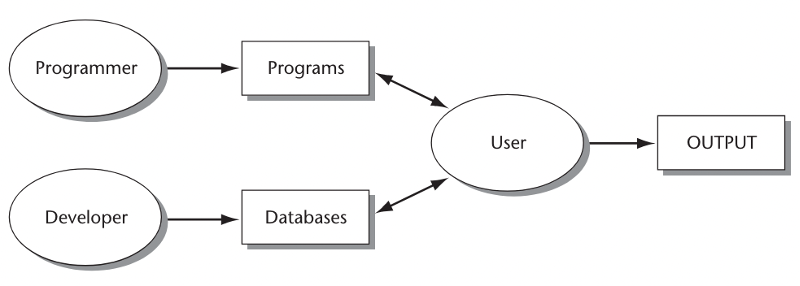
Figure 4.1: Intermediate work Authorship.
Expert and decision-making tools are subject to the same issues. These devices have a tremendous lot of ability and knowledge within the systems themselves, which are meant to mimic how minds work, analytical reasoning, and offer guidance to experts. To put it simply, an expert system is made up of three main components: a knowledge base, which is made up of data and guidelines developed by experts; an algorithm for inference, which is a software program that manipulates the repository of knowledge and applies it to specific problems; and a user experience, which serves to both make the entire system "user-friendly" and explain the reasoning and recommendations that the expert system uses. The knowledge that underpins an expert system's recommendations or reports originates from the following sources:
■ the professionals who offered the information;
■ the individuals who formalized and improved the concept so that it could be considered and incorporated into the knowledge base (also referred to as "knowledge engineers");
■ the authors of the user design and inference engine (or those that modified pre-existing ones); and
■ the system user.
The system's user contributes competence since he must comprehend and interact with the system, as well as interpret its queries and be aware of its constraints. A reasonable basic understanding of the field of expertise examined by the system's expertise (its knowledge domain) is necessary if the result it has generated is to be implemented meticulously. Similarly, the depth, limitations, and challenges that arise from an emerging piece of regulation can only be predicted with sufficient accuracy by a legal professional and, nonetheless, occasionally not correctly. Above all, although not all, highly skilled and decision-making tools cannot be utilized by inexperienced users.
When determining who is the author and who owns the copyright to an output produced by expert and decision-support systems, how will the law interpret that information? It is against common sense to claim that it was created entirely by computers and has no human authorship. While it may be handy, it is unreasonable to claim that the user of this system is its only author. It is insufficient to assign authorship to the experts and knowledge engineers who created the knowledge base because they have no control over the system's use and are unable to forecast how the user would react or utilize it. In actuality, every one of the individuals on the above list is a joint author of the output that comes from the utilization of the system. It is important to note, though, that if the courts adopt this view, it will cause a great deal of difficulties for the commercial application of expert systems and other "intermediate" systems. The licensee or "purchaser" of such systems may own the copyright in any output, for example, even though the courts may be willing to imply such terms. However, it is clearly more reasonable to acknowledge the challenges posed by this section of the Act and to include appropriate contractual provisions for ownership (as compared to authorship) of technological output.