Lecture Notes
| Site: | Newgate University Minna - Elearning Platform |
| Course: | Endocrine and Reproductive System |
| Book: | Lecture Notes |
| Printed by: | Guest user |
| Date: | Friday, 9 January 2026, 8:39 PM |
1. Introduction to Lactation and Postpartum Physiology
1.1 Overview
- Lactation is the process of milk synthesis and secretion by the mammary glands.
- Postpartum physiology covers maternal physiological changes after birth, including endocrine shifts, uterine involution, and metabolic adjustments.
- Both processes are essential for the survival and development of the newborn and the restoration of maternal homeostasis.
1.2 Learning Objectives
By the end of this module, students should be able to:
- Describe the anatomy and functional development of the mammary gland.
- Explain hormonal regulation of lactogenesis and milk let-down.
- Discuss nutritional and immunological components of breast milk.
- Outline maternal physiological changes in the postpartum period.
- Describe mechanisms underlying lactational amenorrhea.
- Highlight common clinical issues during lactation.
2. Postpartum Maternal Physiology
2.1 Uterine Involution
- Contraction and regression of uterus to pre-pregnancy size
- Enhanced by oxytocin release during breastfeeding
2.2 Hormonal Changes
- Drop in estrogen and progesterone
- High prolactin in breastfeeding mothers
- Gradual restoration of hypothalamic–pituitary–ovarian (HPO) axis
2.3 Postpartum Fluid and Metabolic Changes
- Mobilization of fat stores
- Diuresis in first days postpartum
- Increased caloric requirements for lactation
2.4 Postpartum Emotional and Psychological Adjustments
- Baby blues (common)
- Postpartum depression (clinical concern)
- Influence of hormonal shifts and sleep disruption
3. Anatomy and Development of the Mammary Glands
3.1 Structural Anatomy
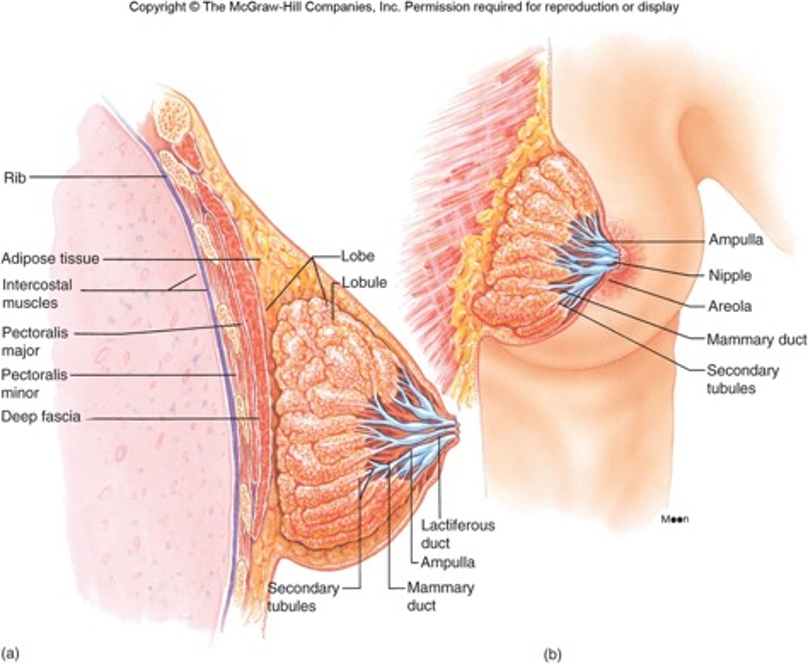
- Mammary glands are modified sweat glands located in the superficial fascia.
- Key components:
- Lobes and lobules
- Alveoli (milk-producing units)
- Lactiferous ducts and sinuses
- Nipple and areola
- Support by Cooper’s ligaments
3.2 Developmental Stages
- Embryonic development: mammary ridge formation
- Puberty: estrogen-mediated ductal growth, fat deposition
- Pregnancy:
- Estrogen → ductal proliferation
- Progesterone → alveolar development
- Prolactin & hPL → differentiation for milk production
- Postpartum: onset of lactation once progesterone levels fall
4. Lactogenesis (Milk Production)
4.1 Phases of Lactogenesis
- Lactogenesis I (mid-pregnancy to early postpartum)
- Milk components begin forming (colostrum)
- Progesterone inhibits full secretion
- Lactogenesis II (day 2–3 postpartum)
- Triggered by sharp fall in progesterone while prolactin remains high
- Sudden increase in milk volume (“milk coming in”)
- Lactogenesis III (maintenance phase)
- Controlled mainly by infant suckling and milk removal
- Supply-demand regulated
4.2 Hormonal Control
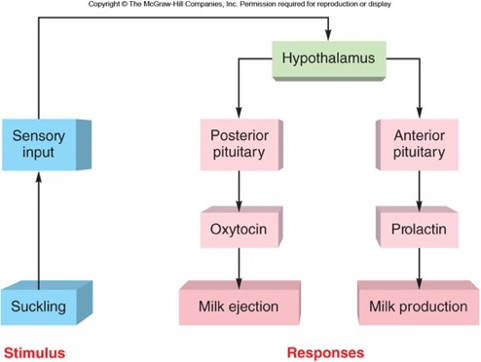
- Prolactin (anterior pituitary)
- Stimulates milk synthesis
- Levels rise with suckling stimulus
- Oxytocin (posterior pituitary)
- Causes alveolar contraction: milk ejection reflex
- Estrogen and Progesterone
- hPL, cortisol, insulin, thyroid hormones
4.3: Milk Ejection (Let-Down Reflex)
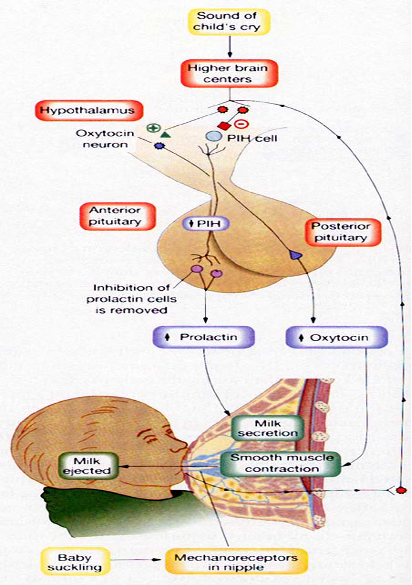
1 Oxytocin Reflex
- Triggered by suckling or emotional cues (hearing baby cry)
- Oxytocin causes contraction of myoepithelial cells around alveoli
- Milk is propelled into ducts and nipple
4.4 Factors Influencing Let-Down
- Enhancers: relaxation, warmth, confidence
- Inhibitors: stress, pain, anxiety
4.5: Composition of Breast Milk
1 Colostrum
- Produced first 2–5 days
- Rich in:
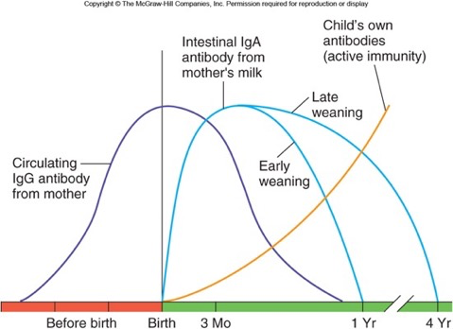
- Immunoglobulin A (IgA)
- Lactoferrin
- Leukocytes
- Growth factors
- Low volume but highly concentrated
- Critical for immune protection and gut maturation
2 Transitional Milk (Day 5–14)
- Higher calories and fat
- Increasing lactose and volume
3 Mature Milk (After 2 Weeks)
- Foremilk: watery, quenches thirst
- Hindmilk: rich in fat, promotes growth
4 Nutritional Components
- Carbohydrates: lactose
- Proteins: casein, whey proteins
- Fats: long-chain fatty acids
- Vitamins and minerals
- Enzymes (lipase, amylase)
4.5 Immunological Components
- IgA
- Lactoferrin
- Lysozyme
- Oligosaccharides (prebiotics)
- Live immune cells
4.6: Lactational Amenorrhea
1 Mechanism
- High prolactin suppresses GnRH
- Low FSH and LH → inhibits ovulation
- Natural but variable contraceptive effect
2 Lactational Amenorrhea Method (LAM)
- Effective (>98%) if:
- Baby is exclusively breastfed
- Mother is within 6 months postpartum
- Menstruation has not resumed
4.8: Clinical Aspects of Lactation
1 Common Issues
- Engorgement
- Blocked ducts
- Mastitis
- Nipple soreness or fissures
- Poor latch
- Inadequate milk supply
2 Management Principles
- Frequent breastfeeding
- Correct breastfeeding technique
- Warm compresses
- Antibiotics for mastitis if required
- Lactation counseling
4.8: Infant Benefits of Breastfeeding
1 Nutritional Benefits
- Ideal composition for growth
- Easily digestible
2 Immunological Protection
- Lower risk of infections
- Gut protection and microbiome formation
3 Long-Term Outcomes
- Improved cognitive development
- Lower risk of obesity and metabolic disorders
4.9: Maternal Benefits of Breastfeeding
Short-Term Benefits
- Faster uterine involution
- Reduced postpartum bleeding
- Natural contraception (LAM)
Long-Term Benefits
- Reduced breast and ovarian cancer risk
- Lower risk of type 2 diabetes
- Emotional bonding
4.10: Summary
- Lactation is hormonally regulated by prolactin (milk production) and oxytocin (milk ejection).
- Breast milk composition changes from colostrum → transitional → mature milk.
- Breastfeeding benefits both infant and mother.
- Postpartum maternal physiology includes uterine involution, fluid shifts, and hormonal changes.
- Lactational amenorrhea provides temporary natural contraception.
- Clinical issues require prompt management and support.
5. Self-Assessment Questions
- What hormonal changes trigger the onset of lactation postpartum?
- Differentiate between colostrum and mature milk.
- Describe the role of oxytocin in the milk let-down reflex.
- Explain how lactational amenorrhea suppresses ovulation.
- List three common breastfeeding problems and their management.