
Introduction to Bioinformatics
Definition:
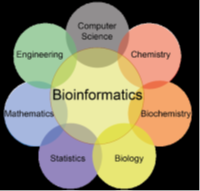
Bioinformatics is an interdisciplinary field that combines biology, computer
science, mathematics, and statistics to analyze and interpret biological data.
It focuses on the collection, storage, retrieval, and analysis of biological
information, especially related to DNA, RNA, and proteins.
History of Bioinformatics
Bioinformatics emerged in mid 1990s. From 1965-78 Margaret O Dayhoff established first database of protein sequences, published annually as series of volume entitled “Atlas of protein sequence and structure”
• During 1977 DNA sequences began to accumulate slowly in literature and it became more common to predict protein sequences by translating sequenced genes than by direct sequencing of proteins
• Thus number of uncharacterised proteins began to increase
• In 1980 there were enough DNA sequences to justify the establishment of the first nucleotide sequence database, GenBank at National Centre for Biotechnology Information (NCBI) USA NCBI served as primary databank provider for information
The European Molecular Biology Laboratory (established at European Bioinformatics Institute (in 1980)
The aim of this data library was to collect, organize and distribute nucleotide sequence data and related information
• In 1986 DNA Data Bank was established by GemonNet Japan
• In 1984 the National Biomedical Research Foundation (established the protein information Resource (
• All these data banks operate in close collaboration and regularly exchange data
• Management and analysis of the rapidly accumulating sequence data required new computer software and statistical tools
• This attracted scientists from computer science and mathematics to the fast emerging field of bioinformatics
Objectives of Bioinformatics
1. Development of new algorithms and statistics for assessing the relationships among large sets of biological data
2. Application of these tools for the analysis and interpretation of the various biological data
3. Development of database for an efficient storage, access and management of the large body of various biological information
Components of Bioinformatics
1. Data
2. Database
3. Database Mining Tools
Key Objectives of Bioinformatics:
- Data Management: Organizing and storing vast amounts of biological data, including genome sequences, protein structures, and metabolic pathways.
- Sequence Analysis: Comparing DNA, RNA, or protein sequences to identify similarities, differences, and evolutionary relationships.
- Structure Prediction: Predicting the 3D structure of proteins and other macromolecules.
- Functional Annotation: Assigning functions to genes and proteins by analyzing sequence patterns.
- Drug Discovery: Assisting in identifying potential drug targets and developing new therapeutics.
- Systems Biology: Understanding the interactions between biological systems at a molecular level.
Major Areas of Bioinformatics:
- Genomics: Analysis of entire genomes to identify genes and their functions.
- Proteomics: Study of protein structures, functions, and interactions.
- Transcriptomics: Analysis of RNA transcripts produced by the genome.
- Metabolomics: Study of small molecule metabolites and their roles in biological processes.
- Phylogenetics: Understanding evolutionary relationships through sequence comparison.
Common Tools and Databases:
- Databases:
- NCBI (National Center for Biotechnology Information): Contains DNA and protein sequences.
- EMBL-EBI (European Bioinformatics Institute): Provides genomic and proteomic data.
- PDB (Protein Data Bank): Repository for 3D structures of proteins and nucleic acids.
- Tools:
- BLAST (Basic Local Alignment Search Tool): For sequence alignment.
- FASTA: For sequence similarity searching.
- Clustal Omega: For multiple sequence alignment.
- PyMOL: For visualizing molecular structures.
Applications of Bioinformatics:
- Genetic Research: Identifying disease-causing mutations.
- Personalized Medicine: Developing treatments based on individual genetic profiles.
- Agriculture: Improving crop yield and resistance through genetic modification.
- Forensic Science: DNA analysis for criminal investigations.
- Evolutionary Biology: Studying species evolution and phylogeny.
Challenges in Bioinformatics:
- Handling and analyzing large datasets (Big Data).
- Integrating data from multiple sources.
- Ensuring data accuracy and reliability.
- Developing efficient algorithms and computational tools.
Bioinformatics has revolutionized biological research by providing tools to
analyze complex biological data. Its integration with other scientific
disciplines continues to expand our understanding of life processes and offers
solutions to medical, agricultural, and environmental challenges.