Introduction to Head and Neck Anatomy
6. Muscles of the Face and Scalp
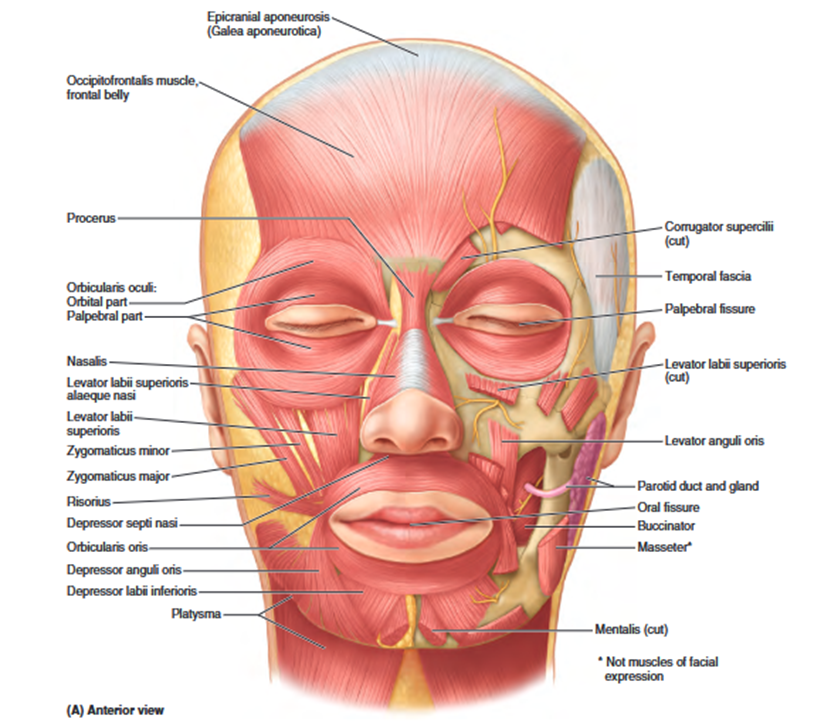
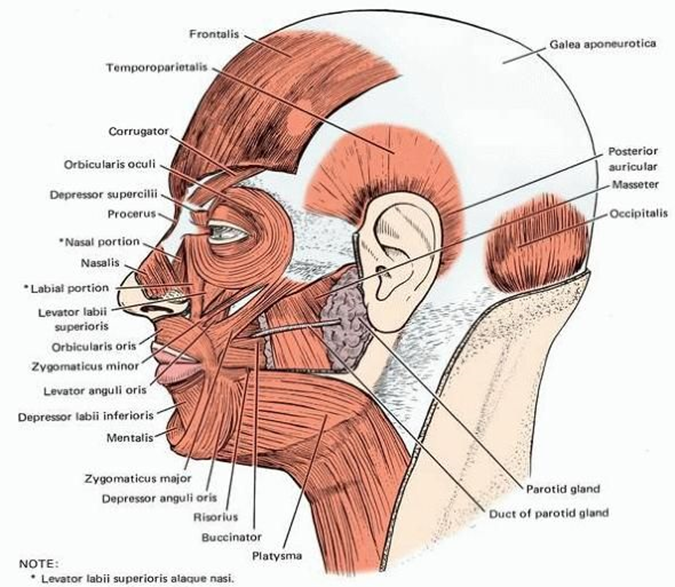
The facial muscles, also known as the muscles of facial expression, are located in the subcutaneous tissue of the anterior and posterior scalp, face, and neck. These muscles enable movement of the skin, allowing for the alteration of facial expressions to communicate emotions. Most of these muscles attach to either bone or fascia and function by pulling the skin.
All facial expression muscles originate from the mesoderm in the second pharyngeal arches. During embryonic development, a subcutaneous muscular sheet forms that extends over the neck and face, incorporating branches of the facial nerve (CN VII) to innervate the muscles derived from the arch. This muscular sheet differentiates into muscles that encircle the facial openings such as the mouth, eyes, and nose hence acting as sphincters and dilators, while also facilitating a variety of facial expressions. Due to their shared embryological origin, the platysma and facial muscles often fuse, resulting in intermingled fibres.