
ELECTRONIC THEORY IN ORGANIC CHEMISTRY
ELECTRONIC THEORY IN ORGANIC CHEMISTRY
1. INTRODUCTION TO ELECTRONIC THEORY IN ORGANIC CHEMISTRY
Organic chemistry deals mainly with carbon compounds, but the real driving force behind all organic reactions is the behavior of electrons.
Electronic Theory explains:
- How electrons are arranged in molecules
- How electrons move during chemical reactions
- Why certain molecules are stable or unstable
- Why some substances are acidic, basic, or reactive
Medical Relevance
In medicine and health sciences:
- Drug–receptor binding depends on electron distribution
- Enzyme reactions involve electron transfer
- Acid–base balance in drugs depends on electronic effects
Everyday / Family Analogy
Think of electrons as family resources (money or food):
- A family with surplus can donate or share
- A family with shortage will receive help
Similarly:
- Electron-rich molecules donate electrons
- Electron-poor molecules accept electrons
2. ATOMIC ORBITALS AND ELECTRON DISTRIBUTION
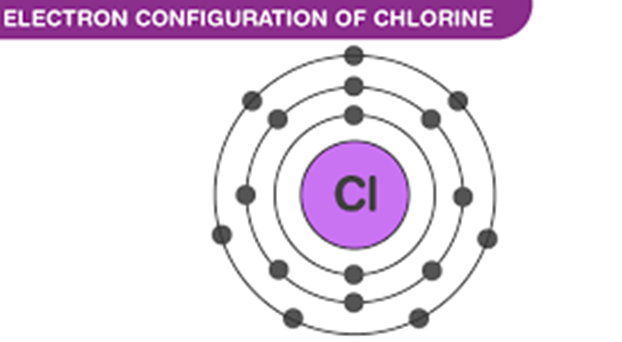
Electrons are found in regions called orbitals around the nucleus.
In organic chemistry, valence electrons (outer electrons) determine:
- Bond formation
- Reactivity
- Chemical behavior
Medical Analogy
Electrons are like medical staff in a hospital:
- Core staff (inner electrons) rarely interact with patients
3. COVALENT BONDING IN ORGANIC COMPOUNDS
3.1 Covalent Bond
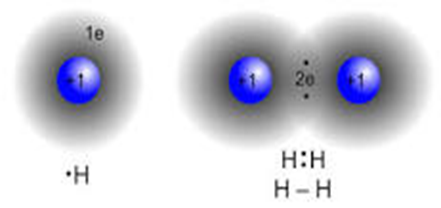
A covalent bond is formed when atoms share electrons.
Example:
Methane (CH₄): carbon shares electrons with four hydrogen atoms.
Family Analogy
Covalent bonding is like siblings sharing a house:
- Everyone contributes
- Everyone benefits
- The bond keeps the family together
4. ELECTRONEGATIVITY AND ELECTRON PULL
4.1 Definition of Electronegativity
Electronegativity is the ability of an atom to attract shared electrons toward itself.
Important Order:
F > O > N > Cl > Br > I > C > H
Medical Analogy
Electronegativity is like oxygen demand in organs:
- Brain → very high demand (high electronegativity)
- Muscles at rest → lower demand
Atoms with high electronegativity pull electrons more strongly.
5. POLAR AND NON-POLAR BONDS
5.1 Polar Bonds
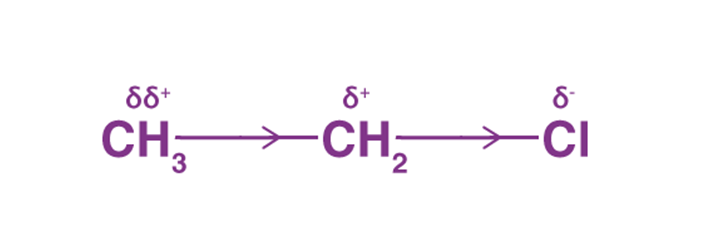
Formed when atoms with different electronegativities share electrons unequally.
Example:
C–Cl bond in chloromethane (CH₃Cl)
- Carbon: δ⁺ (slightly positive)
- Chlorine: δ⁻ (slightly negative)
Everyday Analogy
Like a stronger child pulling a shared blanket — one side ends up with more.
Medical Importance
Polarity affects:
- Solubility of drugs
- Drug absorption and distribution
- Interaction with biological membranes
-
6. INDUCTIVE EFFECT (±I EFFECT)
6.1 Definition
The inductive effect is the permanent displacement of electrons through sigma (σ) bonds due to electronegativity differences.
6.2 Types of Inductive Effect
(a) –I Effect (Electron-Withdrawing Groups, EWG)
Examples:
- –Cl, –NO₂, –COOH
They pull electrons away from the carbon chain.
(b) +I Effect (Electron-Donating Groups, EDG)
Examples:
- –CH₃, –C₂H₅
They push electrons toward the carbon chain.
Medical Analogy
Inductive effect is like blood circulation:
- Blocked vessel → pulls blood away (–I)
- Vasodilation → pushes blood toward tissues (+I)
Importance in Acidity & Basicity
- EWG increase acidity
- EDG increase basicity
7. RESONANCE (MESOMERIC EFFECT)
7.1 Definition
Resonance occurs when electrons are delocalized (Delocalization is the spreading of electrons over more than two atoms instead of being restricted to one bond or one atom: Everyday Analogy 🏠
Imagine family money kept:
- In one person’s pocket → localized
- In a joint family account → delocalized
When the money is in a joint account, everyone can benefit and the family is more stable.
That’s exactly what delocalized electrons do for a molecule — they increase stability.). and cannot be represented by a single Lewis structure.
Examples:
- Benzene
- Carboxylate ion (–COO⁻)
Family Analogy
Resonance is like shared family responsibility:
- No single person carries all the burden
- Everyone contributes → greater stability
Medical Analogy
Like multiple nerve pathways supplying one organ — damage to one does not stop function.
Types of Resonance Effect
- +R (electron-donating): –OH, –NH₂
- –R (electron-withdrawing): –NO₂, –CHO
8. HYPERCONJUGATION (NO-BOND RESONANCE)
8.1 Definition
Hyperconjugation is the delocalization of electrons from C–H bonds adjacent to a double bond or carbocation (A carbocation is an organic ion in which a carbon atom carries a positive charge (C⁺) because it has lost electrons).
Result
Greater number of hyperconjugative structures = greater stability.
Stability Order of Carbocations:
Tertiary > Secondary > Primary > MethylEveryday Analogy
Hyperconjugation is like many small donations supporting a hospital — small individually, powerful together.
Medical Analogy
Like collateral blood vessels supporting a major artery.
9. ELECTROPHILES AND NUCLEOPHILES
9.1 Electrophiles
- Electron-deficient
- Accept electrons
- Examples: H⁺, NO₂⁺
9.2 Nucleophiles
- Electron-rich
- Donate electrons
- Examples: OH⁻, NH₃
Medical Analogy
- Electrophiles → patients needing blood
- Nucleophiles → blood donors
Organic reactions occur when nucleophiles attack electrophiles.
10. ELECTRON MOVEMENT AND CURLY ARROW NOTATION
Curly arrows show movement of electrons, not atoms.
Everyday Analogy
Like bank transfer alerts showing where money moves from and to.
11. APPLICATIONS TO MEDICAL AND HEALTH SCIENCES
11.1 Drug–Receptor Interaction
- Depends on electron donation and acceptance
- Hydrogen bonding, ionic interactions, resonance stabilization
11.2 Acidity and pKa of Drugs
- Influenced by inductive and resonance effects
- Determines absorption and bioavailability
11.3 Drug Metabolism
- Enzyme reactions involve electron transfer
- Cytochrome P450 systems rely on electronic effects
12. SUMMARY TABLE
Concept
Core Idea
Analogy
Inductive Effect
Electron shift via σ bonds
Blood flow
Resonance
Electron delocalization
Shared family duties
Hyperconjugation
C–H electron donation
Community support
Electrophile
Electron acceptor
Patient
Nucleophile
Electron donor
Blood donor
13. CONCLUSION
Electronic Theory is the foundation of organic chemistry and a bridge to medical sciences.
Understanding how electrons behave helps students grasp:- Drug action
- Enzyme catalysis
- Metabolism
- Toxicity
Aromaticity
What is Aromaticity?
Aromaticity is a special stability in certain ring-shaped molecules because their electrons are delocalized (spread out evenly) in a π-electron system.
- Aromatic molecules like benzene are very stable and resist breaking.
- Molecules that are not aromatic are called aliphatic compounds.
Rule for Aromaticity (Hückel’s Rule)
A molecule is aromatic if:
- It is cyclic (forms a ring).
- Each atom in the ring has a p-orbital perpendicular to the ring (planar).
- The molecule has 4n + 2 π-electrons, where n = 0,1,2…
- The molecule is flat (planar).
Everyday Analogy 🏠
Think of aromaticity as a round table in a family dinner:
- Everyone shares food equally (electrons are delocalized).
- Because everyone shares, no one fights, and the dinner runs smoothly (molecule is stable).
Medical Analogy 🩺
Aromaticity is like multiple nerve pathways supplying an organ:
- Electrons are like blood flowing through many paths.
- Even if one path is “blocked,” the organ still works efficiently.
Aromaticity in Daily Life & Biology
- Drugs: Many medicines have aromatic rings (benzene derivatives).
- DNA & RNA: Bases like adenine, guanine, thymine are aromatic.
- Proteins: Aromatic amino acids (phenylalanine, tyrosine, tryptophan, histidine) help build proteins.
- Industry: Benzene, toluene, xylene are raw materials for plastics, nylon, polyester.
6. Electron Donating and Withdrawing Groups
Electron Donating Groups (EDGs)
- Definition: Groups that push electrons toward the molecule, making nearby carbons more electron-rich.
- Effect:
- Increase nucleophilicity (better at attacking electrophiles)
- Reduce electrophilicity (less likely to be attacked)
Examples:
- –OH, –O⁻, –NH₂, –OR, –CH₃
Analogy 🏠:
- EDG = supportive family member giving extra money (electrons) to relatives (carbon atoms).
Medical Analogy 🩺:
- EDG = blood donor, increasing blood supply to tissues (electron density).
Electron Withdrawing Groups (EWGs)
- Definition: Groups that pull electrons away, making nearby carbons electron-poor.
- Effect:
- Make electrophiles stronger
- Reduce nucleophile strength
Examples:
- –NO₂, –CHO, –C=O, –CN, –COOH, halogens
Analogy 🏠:
- EWG = family member taking money away, leaving relatives with less support (electron density).
Medical Analogy 🩺:
- EWG = blood diversion from tissue → less supply, tissue is electron-poor.
7. Importance of Electronic Theory in Organic Reactions
Understanding electron distribution explains why molecules react in certain ways:
Electrophilic Aromatic Substitution (EAS)
- EDGs make benzene rings more reactive to electrophiles.
- Example: –OH group on phenol → easier for bromination.
Nucleophilic Substitution (SN1 & SN2)
- SN1: Forms carbocation intermediate
- Stability depends on electron distribution and hyperconjugation
- Tertiary > secondary > primary
- SN2: Nucleophile attacks from the back
- Rate depends on electron density at carbon
Reaction scheme for SN2:
Nu: ----> [C--X] -----> [C-Nu] + X⁻
(Nucleophile) (Leaving Group)
8. Applications in Medical and Health Sciences
1. Drug Mechanisms & Molecular Interactions
- Receptor Binding: Electron-rich or deficient regions determine drug-receptor fit
- Example: Beta-blockers bind beta-adrenergic receptors → lowers blood pressure
- Enzyme Inhibition: Electron properties affect how drugs block enzymes
- Example: ACE inhibitors bind to ACE → control blood pressure
2. Drug Absorption, Metabolism, & Excretion (ADME)
- Absorption: Electron distribution affects solubility (water vs fat) → affects uptake
- Example: Aspirin is lipophilic, crosses membranes easily
- Metabolism: Electron-rich or poor areas affect enzyme reactions (cytochrome P450)
- Example: Drugs with EWGs are metabolized faster
- Excretion: Electron properties affect renal elimination
- Example: Water-soluble drugs like morphine-6-glucuronide excreted faster
3. Toxicology & Side Effects
- Reactive Metabolites: Electron-deficient drugs can react with DNA/proteins → toxicity
- Example: Paracetamol overdose → liver damage
- Allergies: Electron-rich drugs can bind proteins → immune response
- Example: Penicillin hapten formation → allergy
4. Pharmacogenomics & Personalized Medicine
- Genetic differences affect enzyme activity → drug metabolism varies
- Example: Warfarin effectiveness depends on CYP2C9 genotype
- Receptor variations affect drug binding → dosing can be personalized
5. Disease Mechanisms & Cell Signaling
- Drug interactions with DNA, RNA, proteins depend on electron distribution
- Example: Cisplatin binds DNA → inhibits replication → cancer therapy
- NSAIDs like Ibuprofen → electron properties allow binding to COX enzyme → reduce inflammation
6. Designing Safer & More Effective Therapies
- Understanding electron donating/withdrawing effects helps:
- Optimize drug selectivity
- Reduce side effects
- Improve therapeutic effect
Key Takeaways (Simple Version)
- Aromaticity → delocalized electrons → extra stability
- EDG vs EWG → control reactivity (electron-rich vs electron-poor)
- Electronic effects → explain drug binding, metabolism, toxicity, ADME
- Medical relevance → predicts drug behavior, side effects, personalized dosing
✅ Memory Tip:
- Aromatic rings = stable family dinner table (everyone shares)
- EDG = supportive family member giving electrons
- EWG = family member taking electrons away
- Electron flow = blood flow or money flow in body/family