Networking Device and Protocols
A network protocol is a standardized set of rules governing how data is formatted, transmitted, received, and interpreted across devices on a network. Think of it as the “language” that ensures different computers can understand each other—even with different hardware or software—and guarantees interoperability
1. Introduction
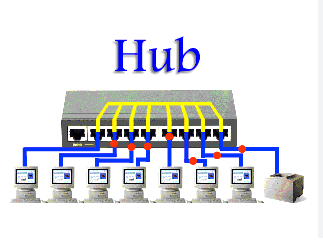
A hub is a basic networking device that connects multiple devices in a local area network (LAN), enabling them to communicate by broadcasting data to all connected devices. Operating at the Physical layer of the OSI model, hubs are simple, legacy devices that have largely been replaced by more advanced devices like switches in modern networks. However, understanding hubs is essential for grasping the evolution of networking technology and the fundamentals of network connectivity.
This lecture note explores the functions, operation, and use of hubs in networking, their role in the OSI and TCP/IP models, and their limitations compared to modern devices. It also provides practical examples and considerations for their deployment.