
Research Methods and Methodology
In the context of academic and scientific research, research methods and research methodology are two terms that are often used interchangeably but have distinct meanings.
Together, methods and methodology provide the foundation for designing and executing a research study, ensuring that the study is both rigorous and systematic, while appropriately addressing the research questions posed.
This module will explain each concept in detail, highlight their differences, applications, and discuss how they work together in the research process.
4. The Research Process: Steps Involved in Conducting Research
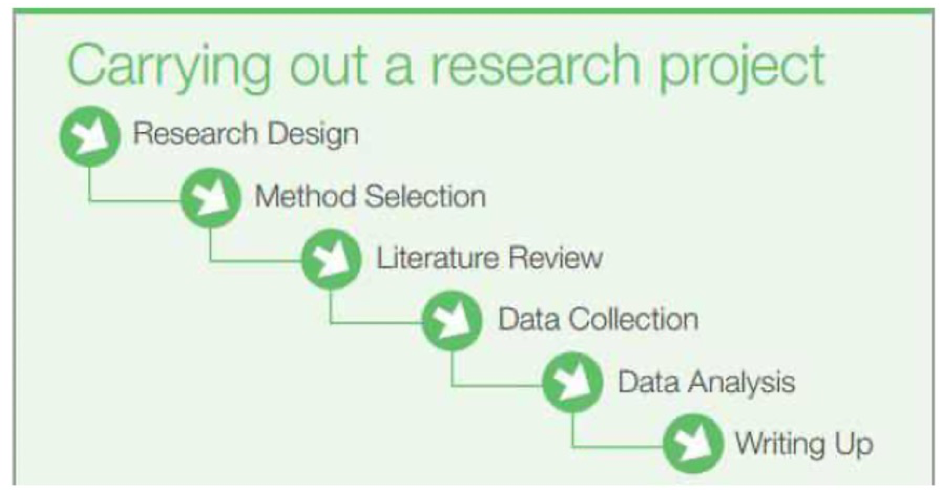
- The research process is a structured and systematic sequence of steps that guide researchers from the inception of an idea to the conclusion of a research study.
- While the exact process can vary depending on the field of study, the research question, and the methodology chosen, there are common stages that apply to most research endeavors.
- This Unit will discuss the key steps involved in conducting research. By following these steps, researchers ensure that their study is thorough, valid, and reliable, leading to meaningful contributions to knowledge in their field.
1. Identifying and Defining the Research Problem
Objective: To clearly understand the issue or question you want to investigate.
- Problem Identification: Start by identifying a research problem or topic of interest. This could come from gaps in existing knowledge, real-world issues, or personal curiosity.
- Literature Review: Conduct a preliminary literature review to understand what has already been researched on the topic. This helps you frame your problem more precisely and avoid duplication.
- Research Questions: Define specific, clear, and focused research questions or hypotheses. These questions should be answerable through research.
Example:
If you’re interested in education, your research problem might be: "How
does online learning impact student performance in high school?"
2. Reviewing the Literature
Objective: To gain a thorough understanding of existing knowledge related to the research topic and identify gaps.
- Comprehensive Review: Conduct a detailed literature review to identify previous studies, theories, and findings. This helps you see where your research fits in the broader academic conversation.
- Identify Gaps: Based on the literature, determine areas where knowledge is lacking, or new questions have emerged. This is where your research will make a contribution.
- Theoretical Framework: In some cases, the literature review also helps you identify theories that will frame your research methodology and analysis.
Example:
You may find that most research focuses on college students’ performance in
online learning but very little has been done on high school students, creating
a gap in the literature.
3. Formulating the Research Hypothesis or Objective
Objective: To clearly state what you aim to prove or explore.
- Hypothesis Formation: If conducting hypothesis-driven research (especially in quantitative studies), you will formulate a hypothesis, which is a testable prediction about the relationship between variables.
- Example: “Online learning will improve high school students' performance in mathematics compared to traditional classroom learning.”
- Research Objective: In some cases, especially in exploratory or qualitative research, you may state the research objective instead, such as “To explore the experiences of high school students with online learning.”
4. Designing the Research Methodology
Objective: To plan the methods and procedures for data collection and analysis.
- Choose Methodology: Decide on the approach you will take, such as qualitative, quantitative, or mixed methods.
- Design Research Methods: Select specific methods for data collection (e.g., surveys, interviews, experiments, observations) based on your research objectives and hypothesis.
- Sampling: Decide how you will select participants or data points (e.g., random sampling, purposive sampling, convenience sampling).
- Operationalization: Determine how you will measure the variables you're studying. For example, how will you define and measure “student performance” in your study?
Example:
For the online learning study, you might use surveys to gather
students' perceptions, test scores to measure performance, and
select a sample of high school students from several schools.
5. Collecting Data
Objective: To gather the necessary information to answer the research questions or test the hypothesis.
- Data Collection Methods: Implement the research methods chosen in the previous step. For instance, distribute surveys, conduct interviews, or run experiments.
- Pilot Testing: In some cases, it’s advisable to test your data collection methods on a smaller sample before fully rolling them out (e.g., pilot surveys or trial runs for experiments).
- Ethical Considerations: Ensure that you obtain the necessary approvals (e.g., ethical review boards) and informed consent if dealing with human participants. Safeguard participants' rights and privacy.
Example:
You conduct an online survey of 500 high school students, asking them about
their experiences with online learning, their study habits, and their
performance on standardized tests.
6. Analyzing the Data
Objective: To process and interpret the collected data to derive meaningful results.
- Data Cleaning: Before analysis, ensure that the data is clean and free of errors. This includes removing incomplete or inconsistent responses or correcting outliers.
- Statistical Analysis (for Quantitative Data): If you have quantitative data, use statistical tools (e.g., SPSS, R, Excel) to perform tests such as correlation, regression, ANOVA, etc.
- Qualitative Analysis: If you're dealing with qualitative data (e.g., interviews or open-ended survey responses), use methods like thematic analysis, grounded theory, or content analysis to identify patterns and themes.
- Interpretation: Draw conclusions based on your analysis. Does the data support your hypothesis, or does it reveal something new?
Example:
You might use statistical tests to determine if there is a significant
difference in the performance of students who took online courses versus those
who took traditional courses. For qualitative responses, you may analyze the
students' feedback on their experiences.
7. Drawing Conclusions
Objective: To summarize the findings and discuss their implications.
- Interpret Results: Summarize the key findings from your data analysis. How do they relate to the original research questions or hypotheses?
- Limitations: Acknowledge any limitations in your study, such as sample size, data collection constraints, or potential biases.
- Implications: Discuss the broader implications of your findings. What do they mean for theory, practice, or policy? Do they confirm, challenge, or extend previous research?
Example:
You conclude that online learning did improve performance in mathematics for
high school students, but that the improvement was smaller than expected. You
also note that students’ engagement levels played a critical role.
8. Writing the Research Report or Thesis
Objective: To communicate your findings in a clear, structured manner.
- Introduction: Briefly introduce the research problem, objectives, and hypotheses. State the significance of the study.
- Literature Review: Summarize relevant research and theories that frame your study.
- Methodology: Describe the research design, sampling methods, and tools used for data collection and analysis.
- Results: Present the findings in a clear, systematic manner. Use tables, charts, and graphs to support your findings.
- Discussion: Interpret the results, link them to your hypotheses, and explore their implications.
- Conclusion: Summarize the research and suggest areas for further study.
Example:
In your research report, you might include tables that compare student test
scores, figures summarizing survey results, and a discussion of how your
findings relate to previous studies on online learning.
9. Revising and Finalizing the Report
Objective: To ensure clarity, coherence, and accuracy in the final research document.
- Editing: Carefully proofread the report for grammar, spelling, and clarity. Ensure that your arguments are logically organized and easy to follow.
- Feedback: Seek feedback from peers, advisors, or colleagues who can provide suggestions or critiques to improve the report.
- Final Submission: Submit your research paper, thesis, or dissertation according to the guidelines of the journal, institution, or publisher you’re working with.
10. Presenting and Disseminating the Findings
Objective: To share your research findings with a wider audience.
- Academic Journals: Submit your findings to peer-reviewed journals for publication.
- Conferences: Present your research at academic or professional conferences. You may deliver oral presentations, poster presentations, or workshops.
- Public Communication: Depending on the significance of your research, you may communicate your findings to the public through press releases, blogs, or social media.
Example:
You submit your findings to an educational journal and present a poster at a
conference on educational technology.