Hypothalamus and Pituitary Gland
Completion requirements
Learning Objectives:
- Describe the location and anatomy of the hypothalamus and pituitary.
- Explain the functional relationship between the two structures.
1. Introduction to the Hypothalamus
1.4. Introduction to the Pituitary Gland
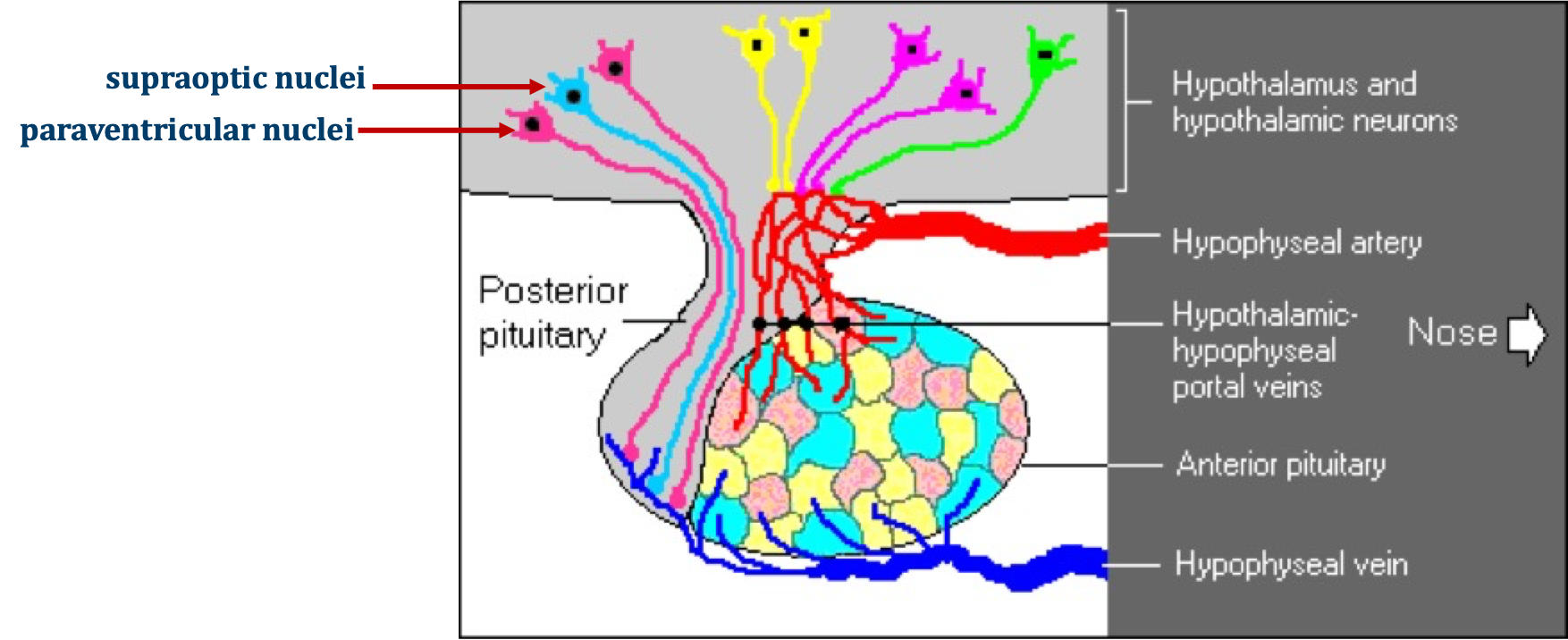
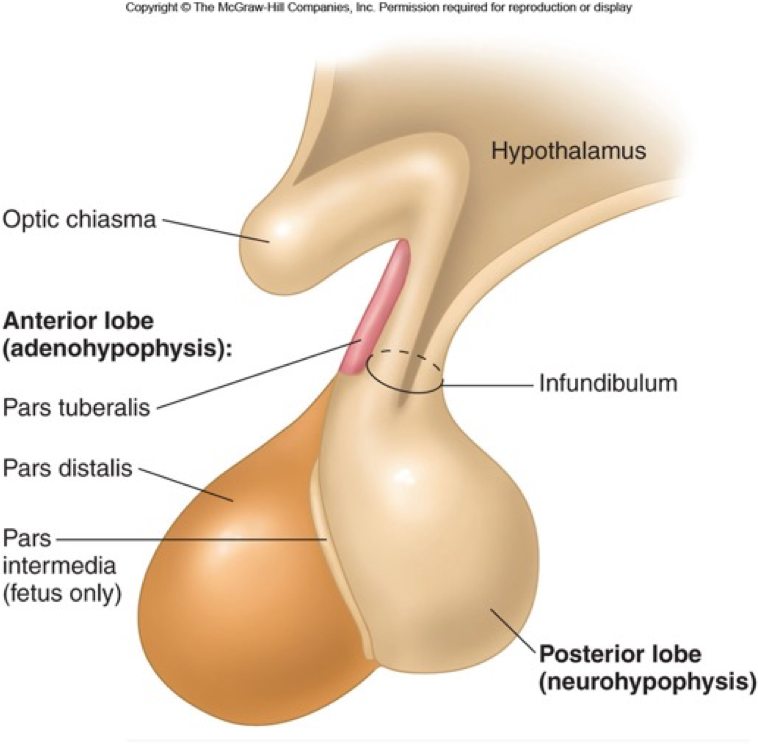
The pituitary gland (hypophysis) is a small, oval endocrine organ situated at the base of the brain. It serves as the master gland, controlling multiple endocrine glands through its secretion of hormones.
It has two major parts with different embryological origins, anatomical structures, and functions:
- Anterior Pituitary (Adenohypophysis) — glandular in nature, secretes multiple trophic hormones and is controlled by hypothalamic releasing/inhibiting hormones.
- Posterior Pituitary (Neurohypophysis) — neural in origin, stores and releases hypothalamic hormones (ADH, oxytocin).
Location and Relations
- The pituitary gland lies in the sella turcica, a depression in the sphenoid bone at the skull base.
- It is covered superiorly by a fold of dura called the diaphragma sellae, through which the infundibulum (pituitary stalk) passes.
- Superior: Optic chiasm
- Inferior: Sphenoid sinus
- Lateral: Cavernous sinuses (containing internal carotid artery, cranial nerves III, IV, V1, V2, VI)
- Posterior: Dorsum sellae