Hypothalamus and Pituitary Gland
Completion requirements
Learning Objectives:
- Describe the location and anatomy of the hypothalamus and pituitary.
- Explain the functional relationship between the two structures.
3. Posterior Pituitary (Neurohypophysis)
Embryology & Structure
- Derived from a downward extension of the diencephalon (neuroectoderm).
- Composed mainly of unmyelinated axons and pituicytes (glial-like cells).
- Subdivisions:
- Pars nervosa (main body)
- Infundibular stalk (connects to hypothalamus)
- Median eminence (interface with hypothalamus)
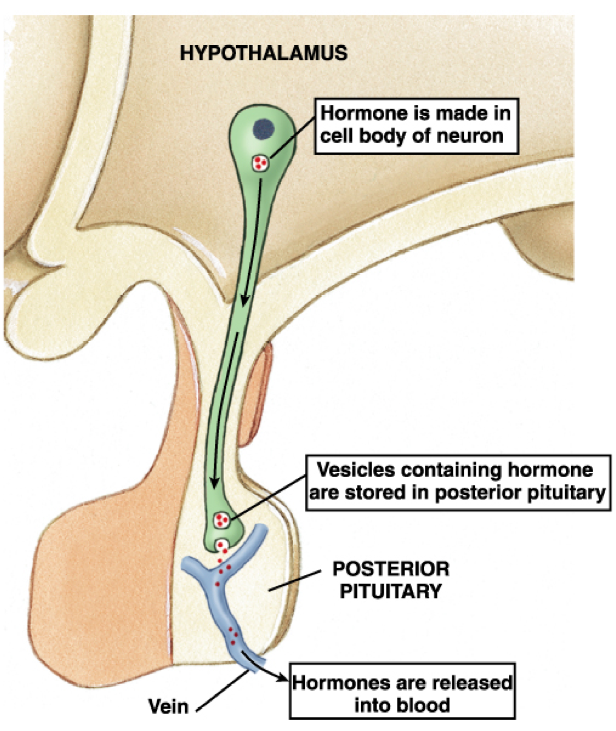
Hypothalamic Nuclei
- Hormones of the posterior pituitary are synthesized in the hypothalamus and transported via the hypothalamo-hypophyseal tract (axonal transport)
|
Hormone |
Site of Synthesis |
Released From |
Main Functions |
|
ADH (Vasopressin) |
Supraoptic nucleus |
Posterior pituitary |
- Increases water reabsorption in collecting ducts (via V₂
receptors) |
|
Oxytocin |
Paraventricular nucleus |
Posterior pituitary |
- Uterine contraction during labor |
- Hormones are synthesized as pre-prohormones, packaged in vesicles, transported down axons, and stored in Herring bodies (axon terminals in posterior pituitary) until release.
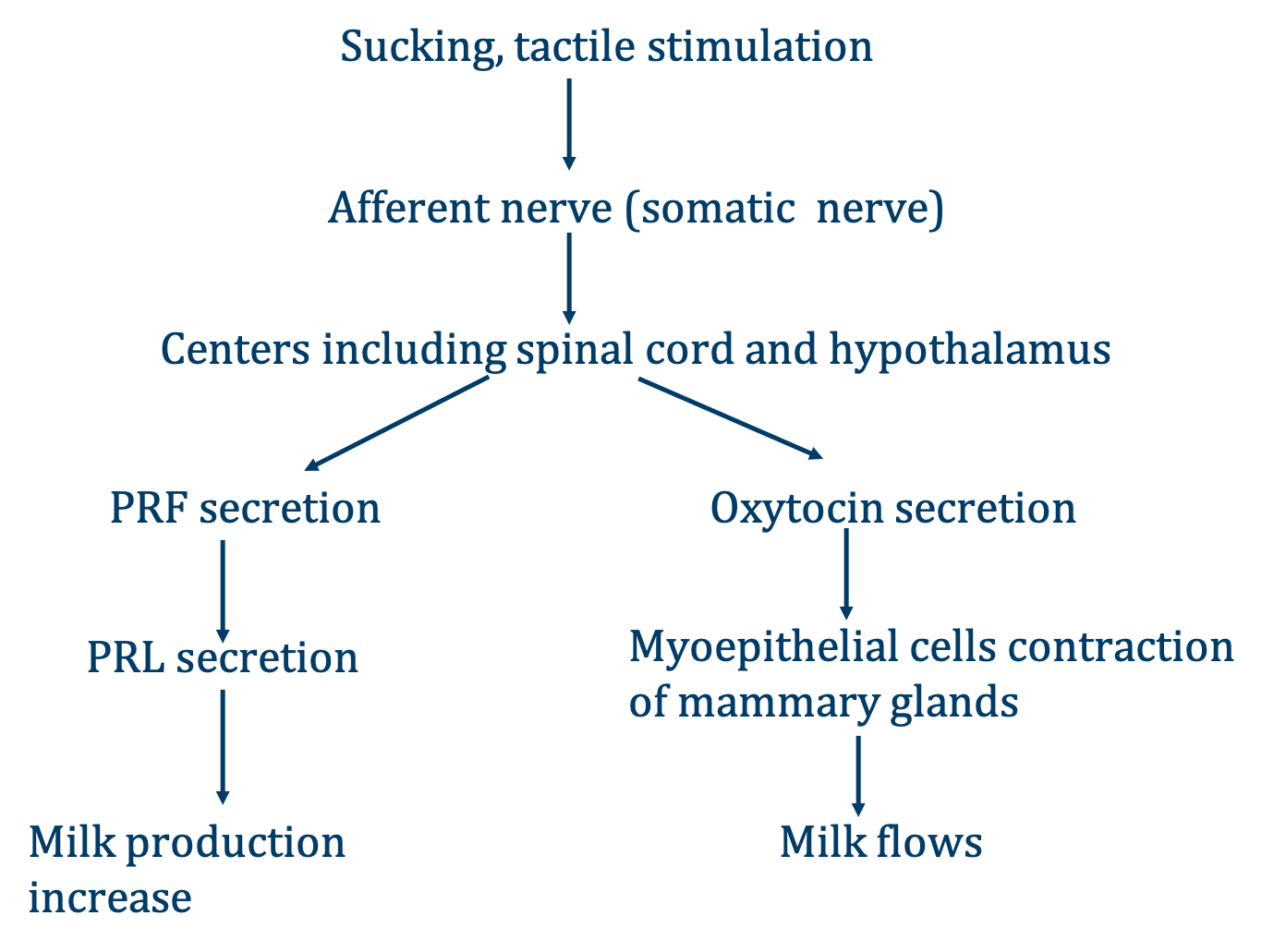
Milk Ejection Reflex