
Lecture NOTES
3. Fertilization
3.1 Overview
- Human fertilization is the process where a sperm fuses with an egg to form a single cell called a zygote.
- Occurs in ampulla region of fallopian tube .
- Requires capacitation of sperm.
3.2 Steps in Fertilization
- Sperm binding to zona pellucida (ZP3 receptor)
- Acrosome reaction → release of enzymes
- Penetration of zona pellucida
◦ Once a sperm penetrates the zona pellucida, it binds to and fuses with the egg's plasma membrane, also known as the oolemma.
◦ The sperm's nucleus, carrying its genetic material, enters the egg's cytoplasm.
◦ When the sperm enters the oocyte, Ca2+ is released from the endoplasmic reticulum.
◦ The Ca2+ has several effects:
1. Prevents other sperm from entering the oocyte
2. Activates the oocyte to finish meiosis to become a haploid ovum

4. Fusion of sperm and oocyte membranes
5. Cortical reaction → block to polyspermy
◦ prevents other sperm from entering the egg after one has successfully fused.
6. Completion of meiosis II by oocyte
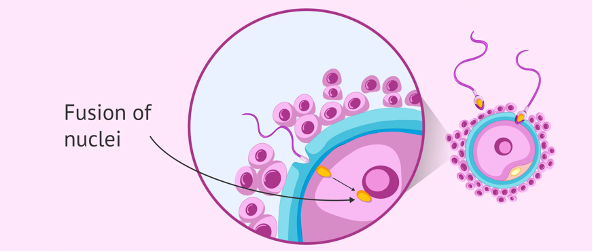
◦ The sperm's head swells to form the male pronucleus, while the egg completes its second meiotic division to form the female pronucleus.
7. Formation of zygote (46 chromosomes)
◦ The male and female pronuclei move together and fuse, combining their genetic material to form a single diploid cell called a zygote.
◦ This marks the completion of fertilization
3.3 Clinical Correlation
- Polyspermy → non-viable embryos.
- Assisted reproduction (IVF) mimics natural steps in vitro.